How to Set a Landscape Design Minimum Fee
How to calculate a landscape design minimum fee, where to state it, and what to say to small-project leads without losing good clients.
Sep 23, 20267 min read
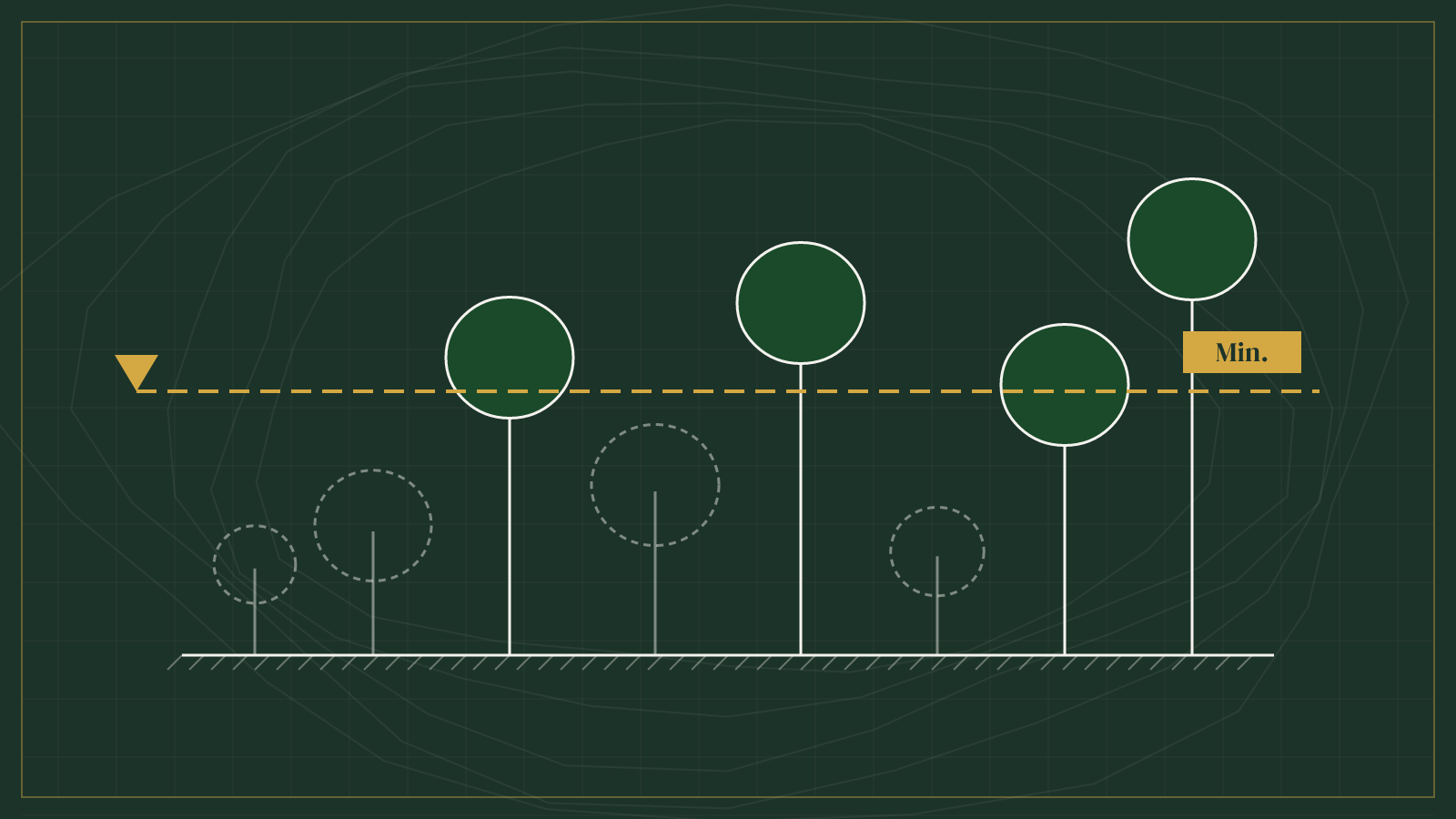
Short answer: A landscape design minimum fee is the lowest design fee you will accept for any design project. To set one, add up the hours every project costs you no matter how small (intake, site visit, meetings, admin, and a baseline of design time), multiply by your billing rate, and round up. In the example below, that works out to a $1,500 minimum. State it early, on your website and in the first call, so small projects either fit your minimum or get pointed to a better option.
What is a landscape design minimum fee?
A minimum fee, also called a project minimum, is a floor on your design fee. Any design project you accept is priced at or above it, even if the design itself is small.
It is different from a minimum construction budget, which design-build firms use to screen installation projects. A design minimum protects your design time. A construction minimum protects your install crew's schedule. Some firms have both.
Why do landscape designers need a minimum fee?
Because small projects aren't proportionally small. A front walkway refresh and a full backyard both need:
- An intake call
- A site visit, including drive time
- At least one client meeting
- Proposals, scheduling, invoicing, and email
Those fixed hours can eat most of a small fee before you draw a single line. Consumer cost guides show small project designs priced at $300 to $600 (HomeGuide). At a sustainable billing rate, that can be less than the fixed hours alone. A minimum fee makes sure every project at least covers what it costs you to take it on.
How do you calculate a minimum fee?
Add up the hours every design project costs, even the smallest one you would realistically take.
Worked example (using a $110 per hour billing rate):
| Fixed time on every project | Hours | |---|---| | Intake call | 0.5 | | Site visit, including drive time | 2.5 | | Client meetings | 2 | | Proposal, scheduling, invoicing, email | 1.5 | | Baseline design and drawing time | 6 | | Total | 12.5 |
12.5 hours x $110 = $1,375, rounded up to a $1,500 minimum design fee.
If you don't know your billing rate yet, start with our step-by-step pricing method. If your market's typical project sits far below your calculated minimum, that's a signal to either shift toward larger projects or build a smaller, tightly scoped product for small jobs.
Does a paid consultation count toward the minimum?
A paid consultation is a separate, capped product: a set amount of your time on site with no drawings. It can sit below your design minimum because its scope is fixed and short. Many designers credit the consultation fee toward a design project if the client moves forward. See how this fits into a tiered menu in Landscape Design Packages.
Where should you state your minimum fee?
Early and plainly. A minimum only works if clients hear it before you invest time.
- Your website. A line such as "Design projects start at $1,500" on your services or pricing page.
- Your inquiry form. A budget question or a note about your minimum before they submit.
- The first call. Say it in the first few minutes, before you book a site visit.
What do you say to a small-project lead?
Keep it short and helpful. A few examples:
- "Our design projects start at $1,500. For a project this size, a 90-minute design consultation might be a better fit. I'd walk the site with you and give you a clear direction you can take to a contractor."
- "This one is smaller than the projects we usually take on. I'd be glad to point you to a contractor who does design and install for projects like this."
- "Our minimum is $1,500. If you're planning more work later, we could design the whole yard now and build it in phases."
The last option often turns a small inquiry into a larger, phased project.
What should you do with projects below your minimum?
- Offer a paid consultation instead of a full design.
- Suggest phasing: design the whole property once, build it over time.
- Refer out to a design-build contractor or a newer designer. Referrals build goodwill and often come back.
- Decline politely. Not every lead is your client. Our client red flags guide helps you spot the ones to pass on.
When should you raise your minimum fee?
- You are booked out more than a few weeks ahead.
- Your billing rate goes up. The minimum should move with it.
- Small projects keep running over the minimum's hours.
- Most of your clients land well above it. The minimum is probably doing little, and a higher one would screen better.
Review it once or twice a year, the same time you review your rates and packages.
Key takeaways
- A minimum fee is the floor for any design project you accept.
- Calculate it from the fixed hours every project costs, times your billing rate.
- State it on your website, your inquiry form, and early in the first call.
- Offer a consultation, phasing, or a referral to leads below the minimum.
- Raise it as your rate and demand grow.
Frequently asked questions
What is a good minimum fee for landscape design?
There's no universal number. Calculate yours from the hours every project costs, including intake, site visit, meetings, admin, and baseline design time, multiplied by your billing rate. At a $110 per hour rate, 12.5 fixed hours works out to about $1,500.
Should I publish my minimum fee on my website?
Yes, in most cases. Publishing a line like "Design projects start at $1,500" screens out projects that don't fit before you spend time on them, and signals to good-fit clients that you run a professional practice.
Is a minimum fee the same as a minimum project budget?
No. A minimum design fee is the lowest fee you accept for design work. A minimum project or construction budget is the smallest installation project a firm will build. Design-build firms often use both.
Will a minimum fee scare away clients?
It will turn away some small projects, which is the point. Clients who fit your practice usually appreciate the clarity. Offer a paid consultation or a referral so leads below the minimum still leave with a next step.
How often should I update my minimum fee?
Review it once or twice a year, and whenever your billing rate changes. If you're consistently booked out or small projects keep running over, it's time to raise it.
Sources
- HomeGuide, How Much Does Landscape Design Cost?
The worked example uses illustrative numbers. Replace them with your own billing rate and tracked hours.
Andrew Wasef
Founder, Yard Genius Network
My background is in landscape architecture and landscape design, and I have years of experience in marketing. Most design practices are strong on the first and thin on the second. Yard Genius Network is where I bridge the two: pricing, proposals, positioning, and the systems that turn good design work into a profitable practice.
Keep reading
PricingSep 23, 20267 min read
Landscape Design Packages: How to Productize Your Design ServicesHow to turn landscape design into fixed-price packages: what to include, how to price each tier, and the mistakes that cause scope creep.PricingSep 23, 20268 min read
Landscape Architect Hourly Rate vs Fixed Fee: Which Should You Use?When to bill hourly, when to charge a fixed fee, and the hybrid structures most landscape practices actually use.PricingSep 23, 20268 min read
How to Price Landscape Design: A Step-by-Step Method With a Worked ExampleA step-by-step way to price landscape design: find your billing rate, estimate hours by phase, add contingency, and turn it into a fixed fee. With a worked example.
Turn this into a system.
Join Yard Genius Network, the free Skool community where landscape designers and architects work through pricing, proposals, and the systems behind a profitable practice.